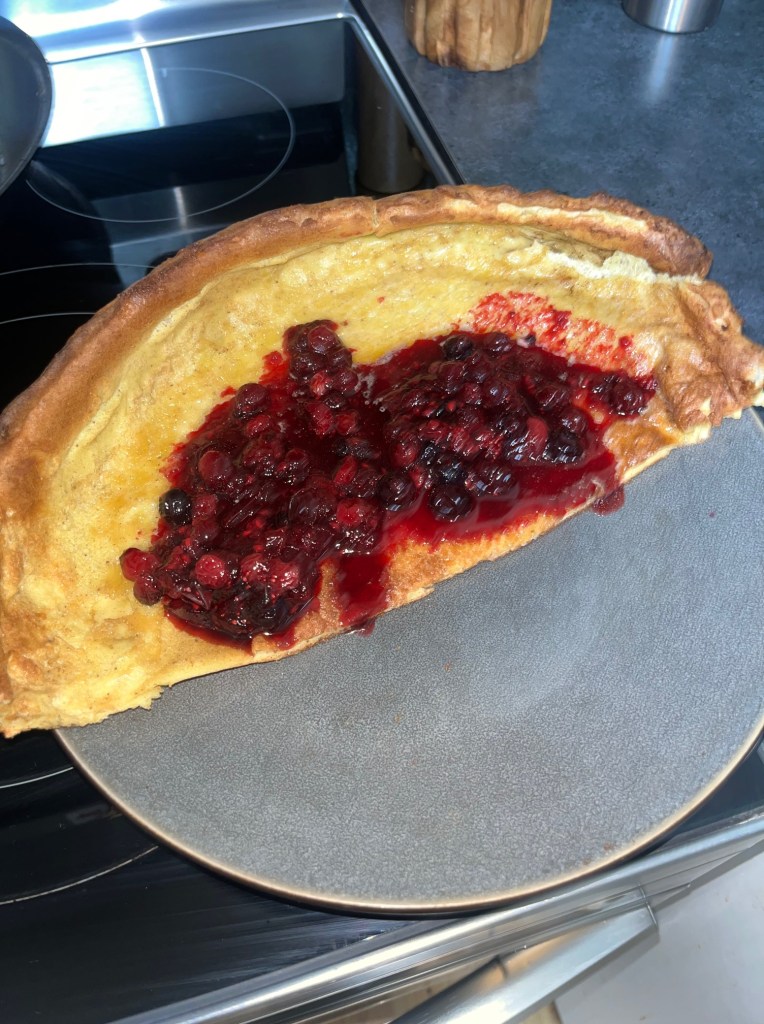
the Dutch Baby is one of my go to Sunday breakfast treats. I have spent years perfecting it! LOL It’s so easy to make that even a novice can turn out a world class Dutch Baby.
Ingredients:
3 eggs
Half a cup of milk (I use 2%)
Half a cup of all purpose flour
1 Tbs of sugar
A generous pinch of ground nutmeg
The way I make it is that I drop the ingredients into a mixing bowl, then using a hand mixer, make sure its all mixed in. Let it rest, in total for about a half hour, while the oven, which you are pre-heating to 425 degrees is getting hot. Make sure to put a clean large frying pan in the oven so it gets hot as the oven gains temperature. Apparently, resting the custard allows the glutens to bind. Anyway, when the oven comes to temperature, add a half stick of butter to the frying pan.
While the butter is melting (which does not take long at that temperature), give the custard another mix with the hand blender, then (using a serious oven mitt) put the frying pain on top of the stove and pour all the custard into the pan, then, again, using a serious oven mitt, put it back in, close the door, and wait a minute till the oven heats up again after having the door open.
What I do next is change the temperature to 400 degrees and once it hits 400 degrees, I set the timer for 20 minutes.
Now here is where you need to know your oven, we just got a new oven, and it’s way more efficient than the last one, so I check it at 17 minutes. This one came out at 18 minutes.
The way we eat this is that we split it down the middle, and today, Heather made a lovely, tangy, tasty berry compote to go with it.
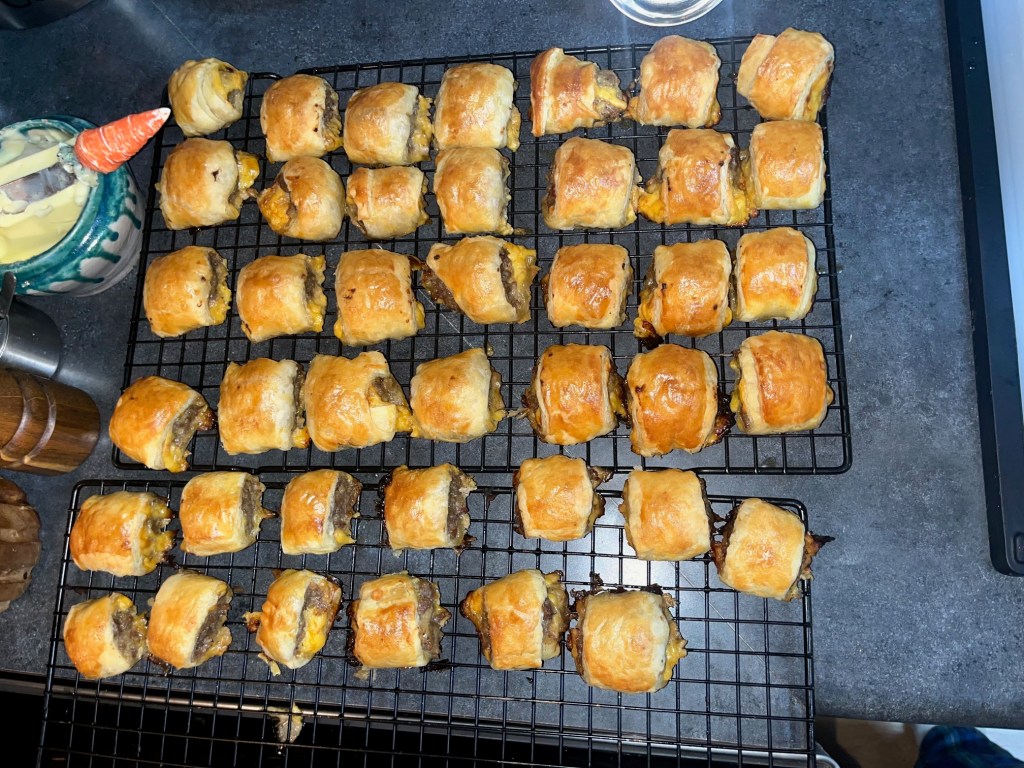
Growing up in South Africa, sausage rolls were one of my favorite snacks. I love meat pies generally, and I also have made Cornish Pasties, Steak and Mushroom Pies, Curry Beef and Curry Chicken pies and more. But, Sausage Rolls are a favorite.
Ingredients:
Medium Brown Onion
I lb of regular sausagte
1 lb of spicy sausage
Regular bread crumbs
2 eggs
Sea salt
Pepper
Cumin
Peri-Peri
Puff Pastry
I like them peppery and spicy. The way I make them is I first caramelize chop the onion. When it cools, I add them in a large mixing bowl to the sausage, and I break one egg into the mixture. I mix it well, assessing the moisture, then I add breadcrumbs, usually about a cup, which helps absorb the moisture. When the mixture feels about right, I add a teaspoon of cumin, a table spoon or two of black pepper, a teaspoon of sea salt and a table spoon of peri peri. I mix it up well to distribute the spices evenly and let it sit, covered in the fridge for a few hours or as long as overnight.
First I preheat the oven to 350.
Then I lightly flour a rolling surface, and roll out the puff pastry. I spoon a long strip of sausage along one side and roll it over so its covered. Then I massage it to get the spread even. I cut off the stop from the rest of the dough, then cut the rolls into bite sizes and place them on a lined cookie sheet. I repeat until the dough is used up. Once all the sausage rolls are on the cookie sheet, I take the second egg, beat it with a little water to make an egg wash. I make sure all the rolls are painted with the egg wash and into the oven it goes. At 30 minutes I check the doneness, and either add more time at the same temperature or, if I want them darker, increase the temp to 400 for the next few minutes. I watch them closely to make sure they don’t burn. I put them on a wire rack to cool. Then when I serve them, I serve them with brown sauce (HP Sauce)
When I first tasted Pad Thai, I honestly had a sense that this was the food for me. The Thai flavors are amazing and Pad Thai is one of my very favorite meals. When it comes to Pad Thai, what I prefer is the more authentic version of the meal than the more Americanized version. The very best recipe I found was this this one for Authentic Pad Thai from Hot Thai Kitchen
LIke with all recipes, I use them as a starting place and fiddle around with it from there. The key thing to pad thai are the ingredients. We are lucky here in the Seattle area to have access to all the ingredients that one might need from anywhere in the far East.
3-4 TBS of Tamarind Sauce (It’s pretty sour, so depending on your preferences use more or less. I use 4.
2 TBS of fish sauce
To make the fish sauce, start with the palm sugar, adding it to a small pot so it melts over medium heat. Once the sugar begins melting, stir until it begins to caramelize, and darken in colour. Immediately add the water, the fish sauce, and the tamarind paste. The sugar will likely harden immediately, which is fine.
Bring sauce to a simmer, then turn off heat. The hardened sugar will probably not have dissolved at this point, even so, let it sit while you prep other ingredients which will give it time to dissolve by the time you need it. Check to make sure that it is dissolved before you start cooking. If it isn’t, warm it and stir it till it is!
Pad Thai noodles are rice noodles that need to be soaked for an hour or so before you drop them in the wok. You need about 4oz (115g) dry rice noodles, medium size, soaked in room temp water for 1 hour. It’s a great idea to cut the soaked noodles in half so they are easier to handle in the wok.
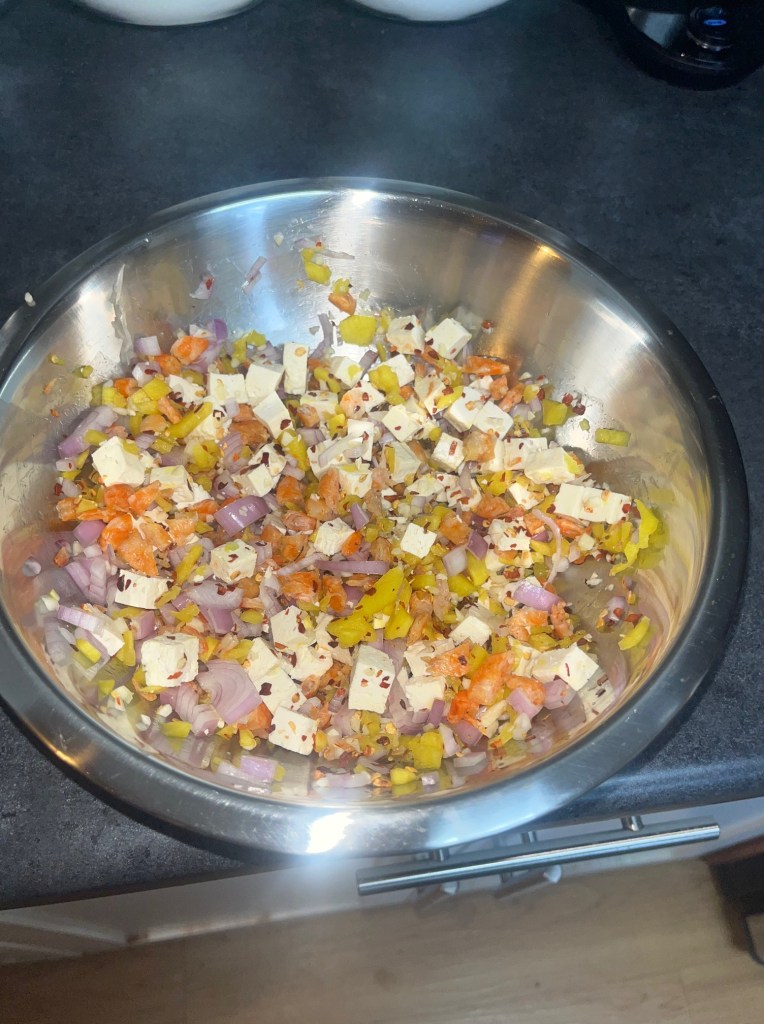
Next I prepare the other ingredients and mix them in a bowl:
The tofu needs to be pressed. Start with a firm tofu, and press it. I put a heavy bottle on top of the tofu till the water stops coming out. Then chop about a third of the brick it into small blocks, and drop them in the bowl.
Add 2-3 TBS of roughly chopped dried shrimp
Add 3 cloves or so of finely chopped garlic
Add a 1.4 cup of roughly chopped shallots
Add 3 Tbs of finely chopped sweet preserved daikon radishes
Add dried chili flakes to taste
Heat the wok with just enough oil to cover the bottom, then sear the shrimp (or chicken or whatever protein you use). We prefer shrimp. I get 10 good size peeled and deveined shrimp, and sear them in a little olive oil with garlic, remove from the wok and set aside.
You also need:
2 eggs
2 1/2 cups of loosely packed bean sprouts
7-10 stalks of garlic chives cut into 2 inch pieces
1/4 cup of roasted peanuts roughly chipped
A lime quartered
To make the Pad Thai,
In the same wok over medium heat, add a little more oil if needed, then add everything in the tofu bowl and sauté for a few minutes until garlic starts to turn golden and shallots are wilted. If the wok looks dry, add a little more oil. (Important: Don’t skimp on oil otherwise the noodles will clump up together.)
Turn heat up to high then drain, and add the noodles and sauce. Keep tossing until all the sauce is absorbed.
Once sauce is absorbed, you can turn off the heat and taste the noodles for doneness. If they’re still undercooked, add a little more water and continue cooking, being careful not to add too much water!
Once noodles are done, push them to one side of the pan. Add add little extra oil to the empty space and add eggs. Break the yolks, then put noodles on top of eggs and cook for about 30 seconds. Flip and toss to mix eggs into noodles.
Toss the cooked protein (shrimp) back in, plus any collected juices. Then add bean sprouts, garlic chives and half of the peanuts.Turn off the heat and toss until well mixed.
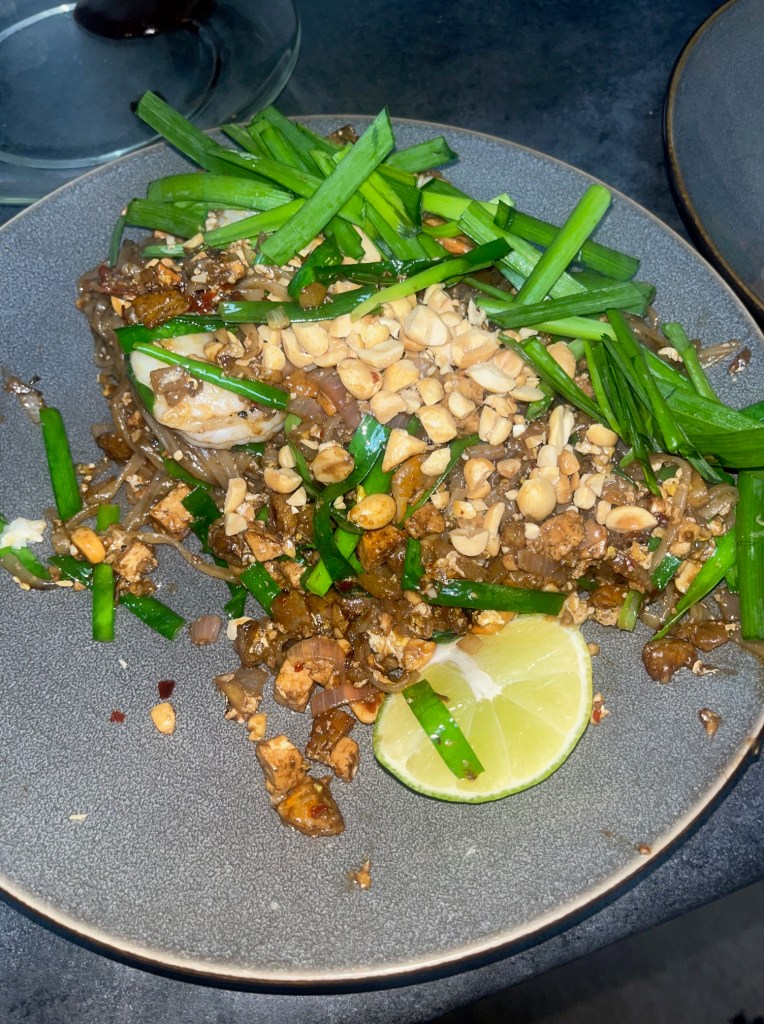
Serve immediately with a lime wedge and extra peanuts on top. For a classic presentation you can add a little extra side of bean sprouts and some garlic chives garnish.
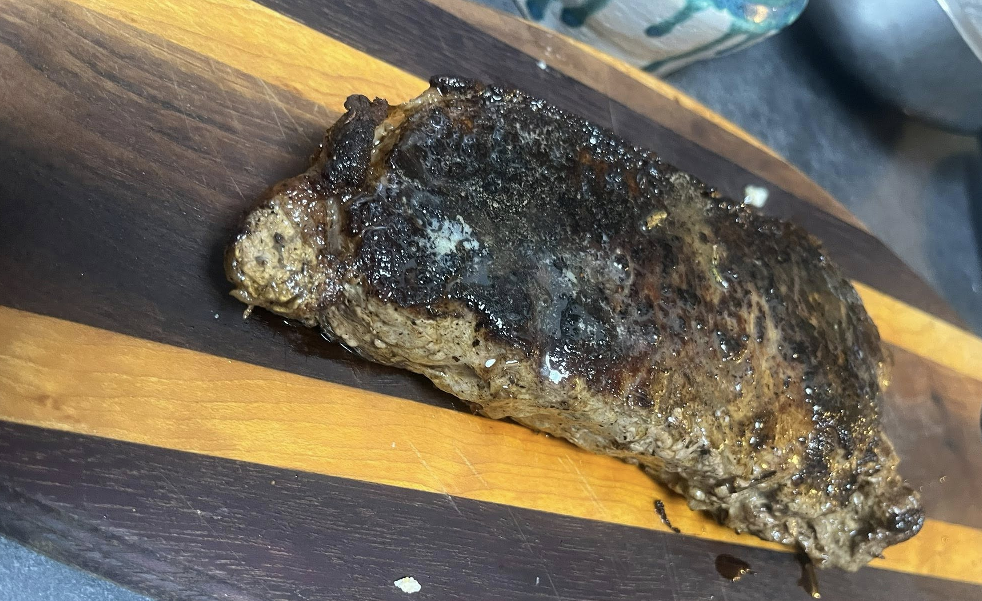
There is nothing better than a perfectly cooked steak. Nothing. Like with all foods, the ingredients matter. WIth steak, it really matters. First of all, choose the right steak. I like a marbled NY Steak or a good thick Fillet Mignon. I let it rest out of the fridge to bring it to room temp. I bring the oven up to temperature (Ours goes to 550 degrees, 600 would be better).
While the oven is heating up, I cut a big beefsteak tomato into two thick slices, season with a little olive oil and salt and begin to caramelize them in a non-stick pan. They need to be cooked through.
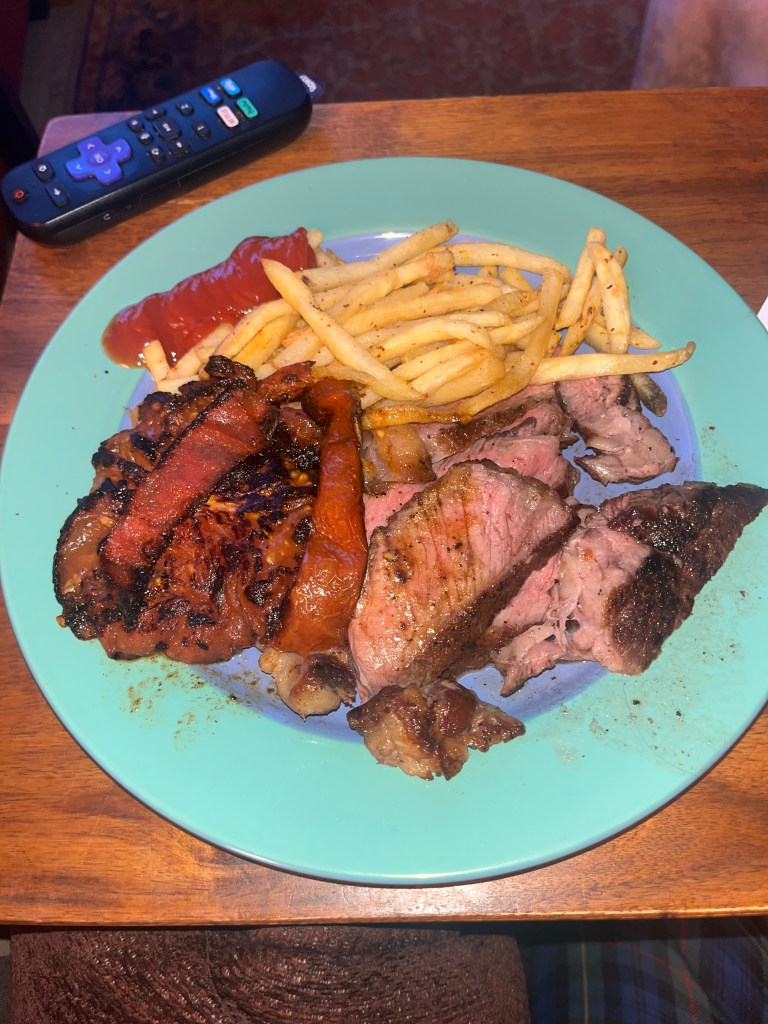
When the oven is heated, I start to warm the iron skillet on the stove top. It needs to come to full temp. With the oven hot, we make the fries. We have found that the frozen string fries are the best, and we do them in two steps. Step 1 is to cook them from freezing at 425 for 15 minutes, then the second part is while the steak is resting, they finish browning in the hot oven. Perhaps another 5 or os minutes.
Back to the steak. I take steak very seriously. My go to is on the rare side of medium rare. What this means is that the internal temperature needs to be in the 105-110 degree range when I set to aside to rest.
What I do is this. About 30 minutes before I start searing it, dry it with a paper towel, then I season it with kosher or sea salt, black pepper and peri-peri on both sides. When the pan is hot, and by that I mean that a little olive oil is smoking, I drop the steak. I sear it for 2 minutes on each side, then it goes into the hot oven on the middle rack. Depending on how thick it is, defines what happens next. I turn it over after 2 minutes and then test the internal temp if it feels cooked. After that I turn it and test it each minute till the temperature is just 105 in the middle using a tip thermometer.
When its on the cutting board resting I add a little butter and finishing salt. Then I carve it on the bias and serve it with the potato of choice, in this case, fries, and the grilled tomato.
The combination of the acidity of the grilled tomato and the juices of the steak make each bite perfect.
I find Indian cooking is so interesting. The use of bold spices and flavors, and how the cooking methods bring those flavors together is what gives the food it’s lingering heat and moreish quality. I love it. One of the things about Indian food is that it can be quite time consuming, so, I sometimes use a shortcut to get the meal prepared. Tiki Masala is one of those that offers a good shortcut. Local grocery stores have various Indian simmer sauces and pastes that offer a quick flavor boost. My Indian friends frown on this strategy, but, I promise, it works.
Ingredients
2 onions
a full garlic
3″ ginger
4 chicken thighs
Spices including
Garum masala
Chili powder
Paprika
Greek yogurt
Lemons
Potato
Carrot
Peppers
Sorrano
Jalapeno
Habanero
Tiki Masala Simmer Sauce/Tiki Masala paste
Method
Skin and chop up the chicken (about 2″ pieces”). I use the cleaver to get through the bones.
Then in squeeze a lemon and drop about a cup of greek yogurt into a bowl to which I add a heaped table spoon of garum masala, paprika and chili powder. I put the chicken in and mix it till its properly covered, adding more lemon juice if needed to make the marinade a paste. That goes into the fridge while I work on the next steps. You could even do this the day before.
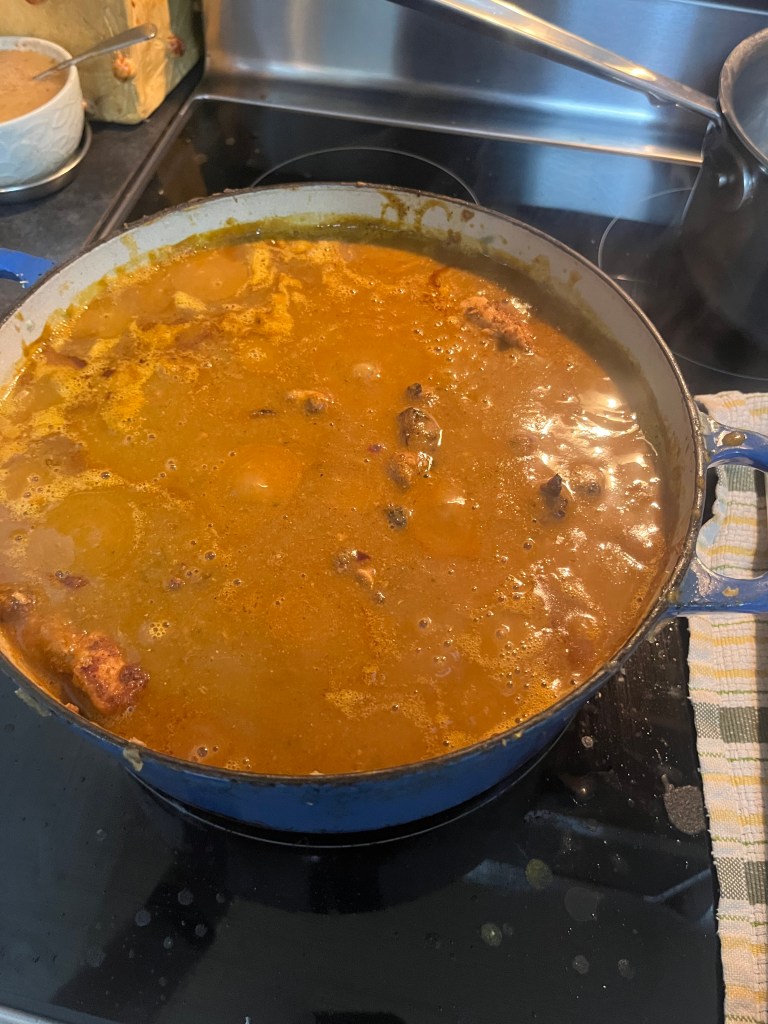
I slice the onions with a mandoline, then saute them with olive oil making sure they don’t turn too dark, or it will be too bitter. While they are cooking, I skin the ginger and the garlic and drop it into a food processor with up to a cup of chicken broth to get a real paste texture. Once the onions are ready, and cool enough to handle, they go into the food processor as well. When the onion, garlic, ginger paste is smooth, I add some oil to a Dutch oven, and when its good and hot I drop the paste into the pot. While that is cooking I chop the peppers, the sorrano into rounds. I deseed the jalapeno and habanero, and drop them in too. When they are all softened and the paste has stopped sizzling, in goes the reserved stock from the turkey soup and the tiki masala paste and simmer sauce. I add any chicken stock needed to make it liquid, bring it to a boil, then turn it down to a medium simmer and leave it partially covered while I attend to the next steps.
I chop and par boil the potato, then drop it in along with the chopped carrot.
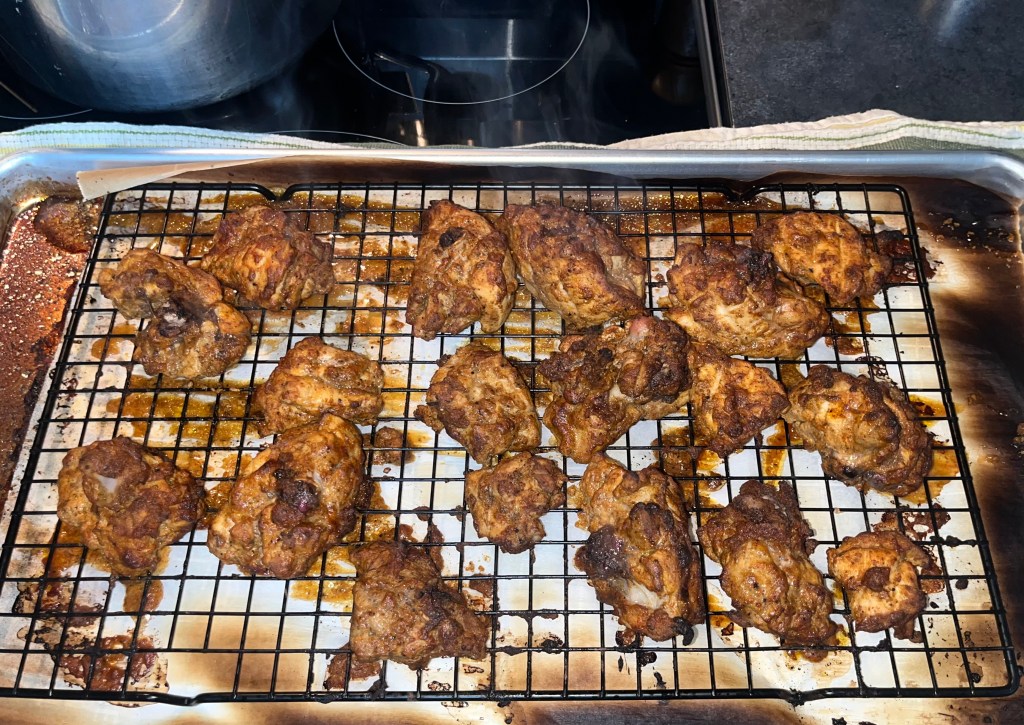
I spread the chicken out on a wire tray and put it into the oven under the broiler for 7 minutes a
Then I drop the roasted chicken into the pot, again, bring it to a boil then put the pot into the oven, covered, at 225 for several hours.
I love to eat curry with all the fixings, and Basmati rice. A note on the rice. Get the best quality rice you can find. It really makes a difference to have a high quality long grained basmati rice with Indian food.
Sliced banana
Shredded coconut
Roasted peanuts
Chopped tomato
Raisins
Chutney
Greek yogurt
Garlic Naan
This curry was spectacular. It had a lingering heat that just kept coming, but the savory nature of the meal was such that you just wanted to go back for another bite, and you definitely mop the plate with the Garlic Naan! What I love about curries is that they all have their own flavor and textures and they all come together in their own unique way! Plus, are there any better left overs?
Next up for us, one of our favorite meals. Steak and Chips!
I loosely follow the recipe for the soup from Jane Brody”s book “Good Food.” It’s a two part recipe, first to make the stock from the bones. I put everything that’s left over in the pot including the stripped bones (meat reserved along with at least a good part one breast for the soup.) Along with the bones I use
2 ribs of celery
2 onions
2 carrots
1/2cup of well washed leek
1/2 cup turnip a few cloves of garlic
All the left over gravy
some salt and a bouquet of fresh parsley, thyme leaves and a bay leaf
I cover the whole lot in water, bring it to the boil and then let it simmer all day (at least 3 hours).
The magic happens next. First I remove the bones and then strain the broth into a pot. I separate out as much of the meat as I can (saving it for the soup.) Then with a cup or two of the broth, I puree the vegetables and save it for later in the freezer.
Next to make the soup itself, I start over with fresh veg.
2 TBS of minced onion
a couple of garlic cloves minced
1 tbs of butter
1 cup diced carrots
1/2 cup diced celery
1.2 cup finely chopped mushrooms
1/2 tbs of flour
I melt the butter and drop the vegies. Once the vegies are softened and the liquid has come out of the mushrooms, I drop in the flour. Once incorporated, I add the stock back and bring it to a boil, then let it simmer. I add a teaspoon of marjoram and, depending on what we have around, either cooked rice or pasta or uncooked orzo. After an hour or so, I drop in the saved meat that I have chopped into bite size chucks. I finish it with hot pepper and serve it with fresh parsley and a great heavy (ideally) black bread.
One of the steps in making Turkey Carcass Soup, as noted, leaves a few cups of the most delicious stock that is great for pies or other things. We used on to make a wonderfulTiki Masala Curry.




 My Life: A Memoir