Making Sourdough Pizza Dough

For a while now, I have wanted to create a sourdough starter. I have tried in the past to do this, but never really had a good enough temperature situation to do so. The Pacific NW is too temperate. Too hot in the summer and not hot enough the rest of the year, as well as being too humid ongoingly. Anyway, that was my excuse as to WHY I could not successfully get a sourdough starter going.

We got ourselves a proofer. It was a gift from Heather’s mom a couple of years ago, and for a long time, mainly because we do not make bread, it sat up high on top of the kitchen cupboards. Then we started making pizza dough, which had us pull it down and set up a place where it could live so it was accessible. That had us thinking about sourdough starter once again. This time I went for it.

A sourdough starter is a living culture made from just flour and water. Over time, it becomes home to

  • Wild yeasts (which make dough rise)
  • Lactic acid bacteria (which create sour flavor and help preserve the bread)

These microorganisms are already present on the grain, especially in the lovely wild stone ground flour we are using. Its also present in the air, and on our hands and kitchen tools. So, I began using a 50/50 mixture of water and flour and over about 10 days, I discarded most of it and fed it with another 50/50 blend. I did that religiously until it settled down and smelled lovely and sour rather than like acetone. At that point I put it in the fridge, sealed. Armed with a sourdough starter, that we call Guinnivere, we now have a new friend in our kitchen that needs love and attention.

When I make pizza dough, I use a specific recipe:

  • 150g of pizza flour
  • 9 g of salt
  • 270 g of water (at 65 degrees)
  • 1 packet of yeast
  • Then once its combined, I mix it at medium speed for about 7 minutes.
  • After that, I let it rise for about 5 hours in the proofer before I separate it and let it rise in the fridge for two or three days.

What makes working with sourdough starter is that it all takes a little bit longer. First of all, the quantities are quite different. There has to be an adjustment on both the amount of dough as well as the amount of water. This is what I do;

  • 365 g flour
  • 225 g water (instead of 220 g)
  • 100 g starter
  • 9 g salt

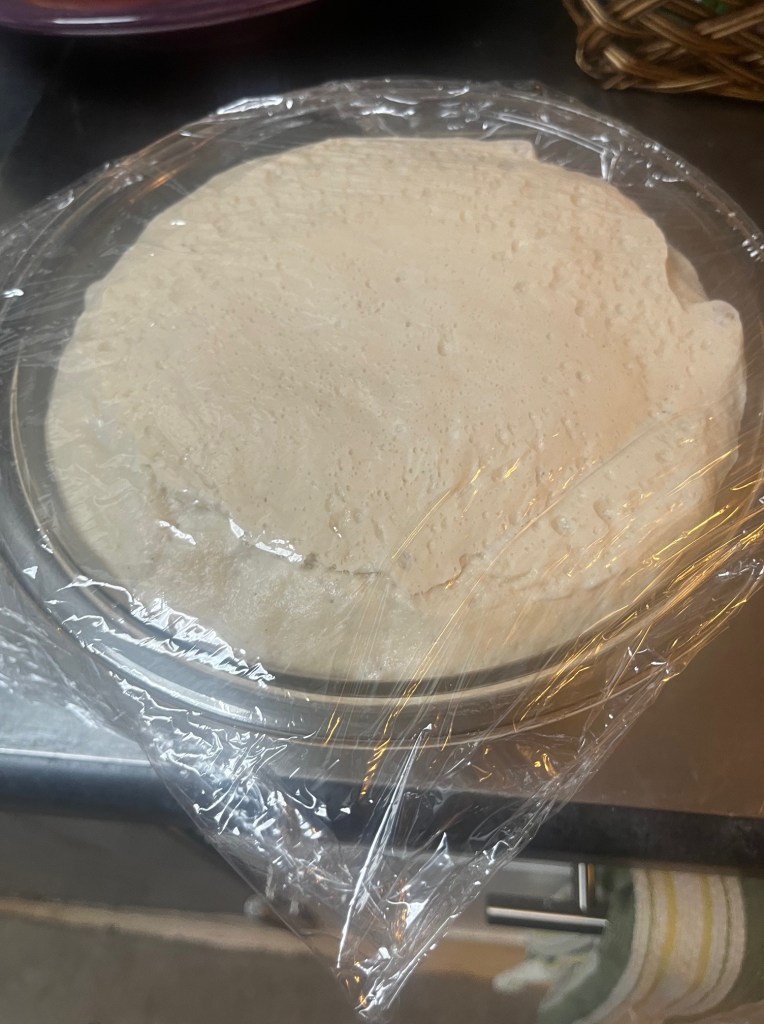
Then, I put it, covered, in the proofer, but instead of 5 hours, it lives there overnight. By that time, it rises quite a lot, which is good. It keeps yeast active, it speeds bacterial activity just enough, which it allows the gluten to develop before the cold (of the second rise) tightens it. Once it rises and I have divided it for the second rise, I cover it with olive oil so it does not dry out, I let it rise in the fridge for 30 minutes uncovered before covering it.

As it chills in the fridge, the fermentation slows, the structure set and the handling improves dramatically.

Divided, each piece makes a 14 inch pizza that tastes brilliant!

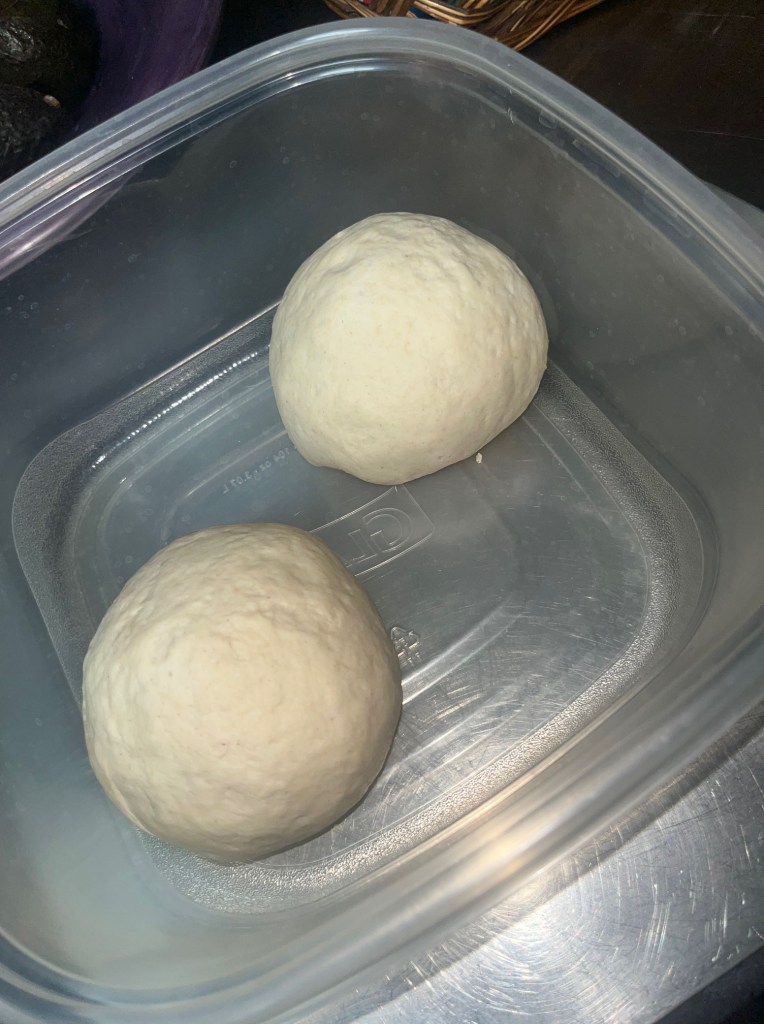
This is the look right before it goes in the fridge.

I normally cover the dough with olive oil so it doesn’t dry out, then put it in the fridge uncovered for 30 minutes before covering them. I try to make them 2 or 3 days before we need them so they can continue to ferment.

Dutch Baby

the Dutch Baby is one of my go to Sunday breakfast treats. I have spent years perfecting it! LOL It’s so easy to make that even a novice can turn out a world class Dutch Baby.

Ingredients:

  • 3 eggs
  • Half a cup of milk (I use 2%)
  • Half a cup of all purpose flour
  • 1 Tbs of sugar
  • A generous pinch of ground nutmeg

The way I make it is that I drop the ingredients into a mixing bowl, then using a hand mixer, make sure its all mixed in. Let it rest, in total for about a half hour, while the oven, which you are pre-heating to 425 degrees is getting hot. Make sure to put a clean large frying pan in the oven so it gets hot as the oven gains temperature. Apparently, resting the custard allows the glutens to bind. Anyway, when the oven comes to temperature, add a half stick of butter to the frying pan.

While the butter is melting (which does not take long at that temperature), give the custard another mix with the hand blender, then (using a serious oven mitt) put the frying pain on top of the stove and pour all the custard into the pan, then, again, using a serious oven mitt, put it back in, close the door, and wait a minute till the oven heats up again after having the door open.

What I do next is change the temperature to 400 degrees and once it hits 400 degrees, I set the timer for 20 minutes.

Now here is where you need to know your oven, we just got a new oven, and it’s way more efficient than the last one, so I check it at 17 minutes. This one came out at 18 minutes.

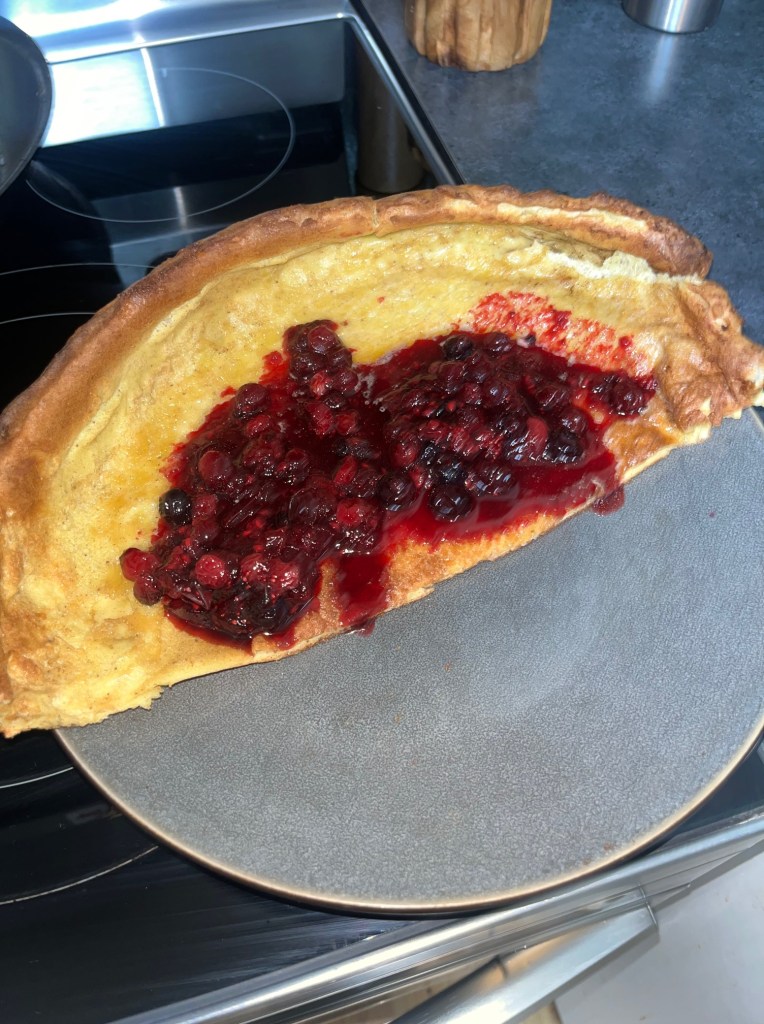
The way we eat this is that we split it down the middle, and today, Heather made a lovely, tangy, tasty berry compote to go with it.

Enjoy!

Sausage Rolls

Growing up in South Africa, sausage rolls were one of my favorite snacks. I love meat pies generally, and I also have made Cornish Pasties, Steak and Mushroom Pies, Curry Beef and Curry Chicken pies and more. But, Sausage Rolls are a favorite.

Ingredients:

  • Medium Brown Onion
  • I lb of regular sausagte
  • 1 lb of spicy sausage
  • Regular bread crumbs
  • 2 eggs
  • Sea salt
  • Pepper
  • Cumin
  • Peri-Peri
  • Puff Pastry

I like them peppery and spicy. The way I make them is I first caramelize chop the onion. When it cools, I add them in a large mixing bowl to the sausage, and I break one egg into the mixture. I mix it well, assessing the moisture, then I add breadcrumbs, usually about a cup, which helps absorb the moisture. When the mixture feels about right, I add a teaspoon of cumin, a table spoon or two of black pepper, a teaspoon of sea salt and a table spoon of peri peri. I mix it up well to distribute the spices evenly and let it sit, covered in the fridge for a few hours or as long as overnight.

First I preheat the oven to 350.

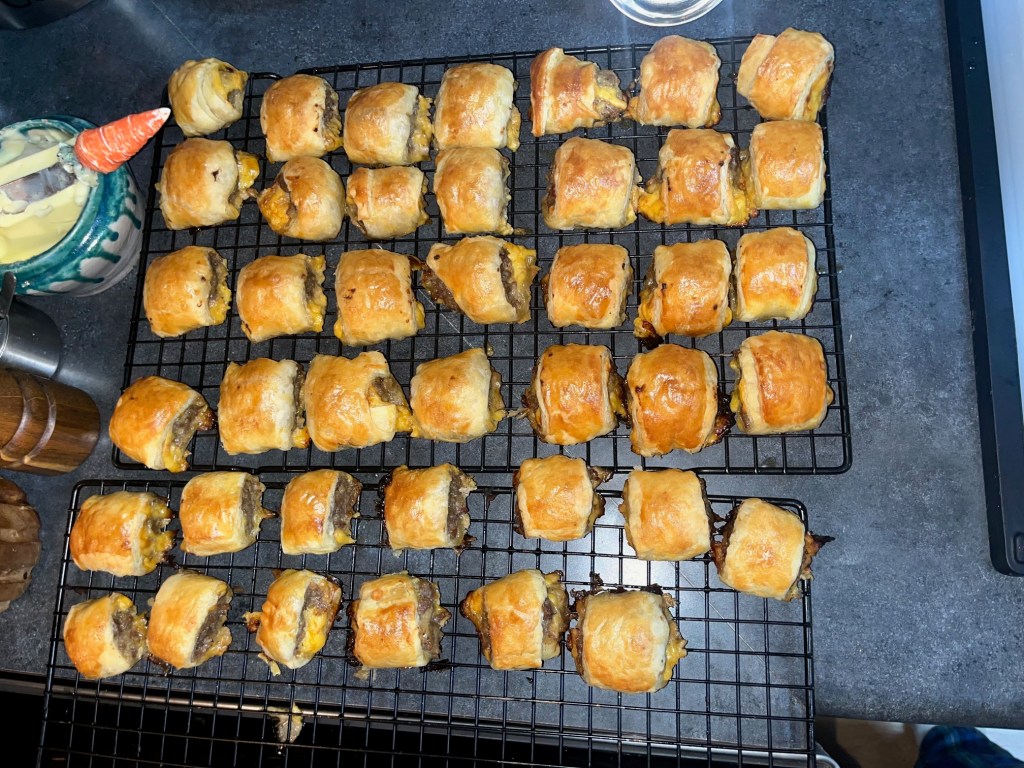
Then I lightly flour a rolling surface, and roll out the puff pastry. I spoon a long strip of sausage along one side and roll it over so its covered. Then I massage it to get the spread even. I cut off the stop from the rest of the dough, then cut the rolls into bite sizes and place them on a lined cookie sheet. I repeat until the dough is used up. Once all the sausage rolls are on the cookie sheet, I take the second egg, beat it with a little water to make an egg wash. I make sure all the rolls are painted with the egg wash and into the oven it goes. At 30 minutes I check the doneness, and either add more time at the same temperature or, if I want them darker, increase the temp to 400 for the next few minutes. I watch them closely to make sure they don’t burn. I put them on a wire rack to cool. Then when I serve them, I serve them with brown sauce (HP Sauce)