Pesto Fettuccini with Chicken

We LOVE this dish. Fresh pasta with pesto is just amazing. First I make the best fresh pasta, and normally let is dry out a bit on the day by making it early so it has the whole day to rest. Then, i boil the chicken breast for about 5 minutes before I take it out and slice it. It goes back in the boiling water to get rid of all the pink. I toast pine nuts, and I am ready to go. I make sure the water for the pasta is salty, and bring it to a boil. I drop the pasta, and while its coming back to temperature, I begin to slowly heat the pesto. To make sure it does not stick to the pan, I drop a ladil of pasta water in the pan and mix together along with the sun dried tomatoes and a healthy pinch of red pepper flakes. As it comes to temperature, I test the pasta. It needs to be el dente, and because it’s fresh, it takes no more than about a minute or two at a boil. I move the pasta from the water to the pesto pan and begin to mix it all. I turn it up a little so make sure it continues to cook and come together. I dish the pasta leaving sauce in the pan and drop the chicken into the pan to pick up the sauce, then I dish the chicken. I finish with pine nuts and parm. It’s delicious!

Ingredients:

  • Fresh pata
  • Basel Pesto (store bought or home made)
  • Sliced cooked chicken
  • Sun dried tomatoes, chopped
  • Red pepper flakes
  • Parmesan

Fresh Pasta

My pasta is to die for. Seriously. What I do is use just over a cup of pasta flour (all purpose works fine too). Make a well and drop in one whole egg and 3 egg yolks.

I use one tablespoon of salt and only drops of water to get the consistency right. Once it comes together, I wrap it and put it in the fridge for a couple of hours. Then I begin to work with it and eventually get it through the pasta machine to press it.

I do two passes through level 1 and then one pass through levels 2, 3 and 4. Depending on the bite I am looking for, I usually stop there if I am making fettucine or I go on to level 5 or 6 if I am making ravioli. After that, I use the fitting to cut my fettucine.

I usually make the pasta in the morning so it has time to dry a little. Heather will tell you. It’s prefect pasta!

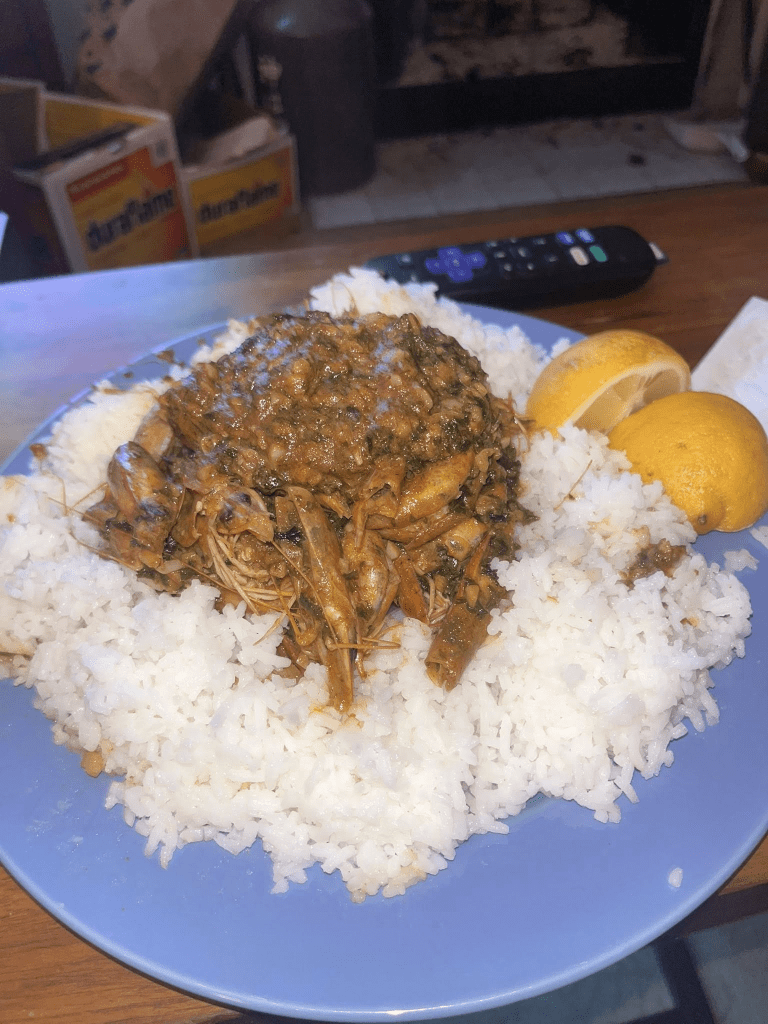
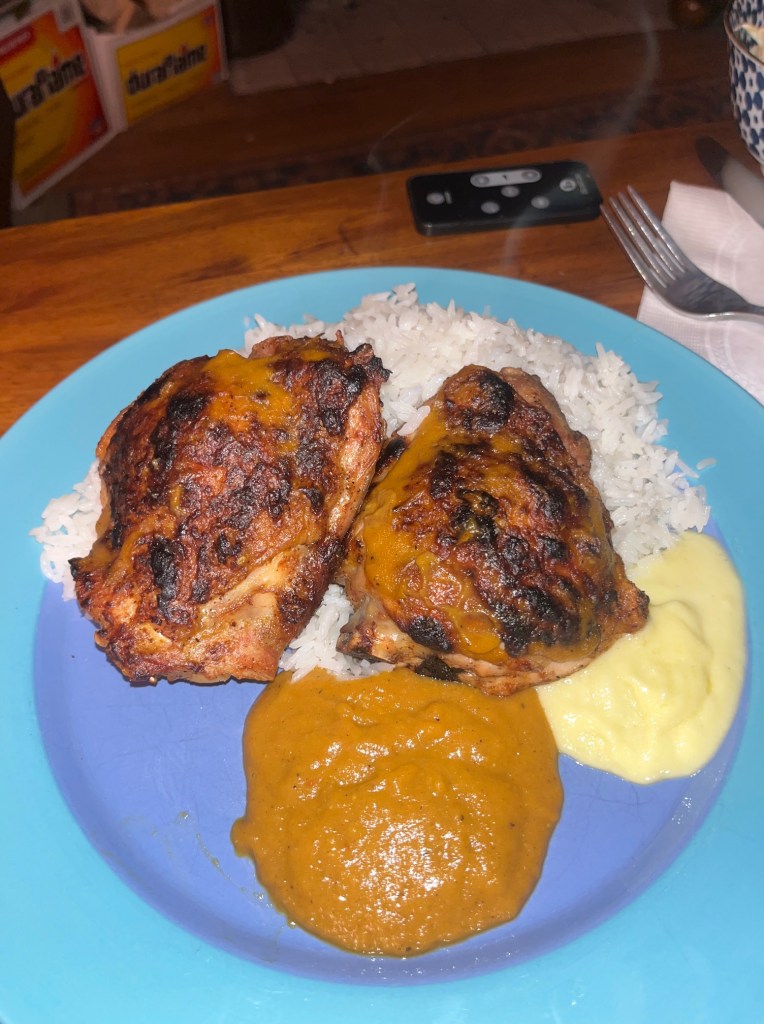
Galliina en Salsa de Cacahuete (Chicken in Peanut Sauce)

Gallina en Salsa de Cacahuete is rich, nutty, and savory dish from Equatorial Guinea. It’s pretty simple, but takes a while to do all the steps. First you make a chicken stock using the chicken pieces plus onion, garlic, bay leaves and spices (peri peri). After covering and simmering it for about 20 minutes in chicken stock, you set the chicken aside, then set about making the peanut sauce. Here you use tomatoes, onion, garlic, salt, cumin and chili’s (peri peri) and roasted peanuts that are ground up. Then using the chicken stock that was set aside, you bring the sauce up to a pourable consistency, drop the reserved chicken in and let it simmer together for about another 20 minutes. Serve it over coconut rice. I made the rice by rinsing basmati rice and soaking it for a half hour before bringing it to a boil in coconut milk, a little salt and a couple of bay leaves. Once it came to a boil, I turned it down and stirred it on a medium heat till the water in the coconut milk had largely evaporated, then I covered it off the heat and let it sit for about 20 minutes before fluffing it with a fork.

Making Sourdough Pizza Dough

For a while now, I have wanted to create a sourdough starter. I have tried in the past to do this, but never really had a good enough temperature situation to do so. The Pacific NW is too temperate. Too hot in the summer and not hot enough the rest of the year, as well as being too humid ongoingly. Anyway, that was my excuse as to WHY I could not successfully get a sourdough starter going.

We got ourselves a proofer. It was a gift from Heather’s mom a couple of years ago, and for a long time, mainly because we do not make bread, it sat up high on top of the kitchen cupboards. Then we started making pizza dough, which had us pull it down and set up a place where it could live so it was accessible. That had us thinking about sourdough starter once again. This time I went for it.

A sourdough starter is a living culture made from just flour and water. Over time, it becomes home to

  • Wild yeasts (which make dough rise)
  • Lactic acid bacteria (which create sour flavor and help preserve the bread)

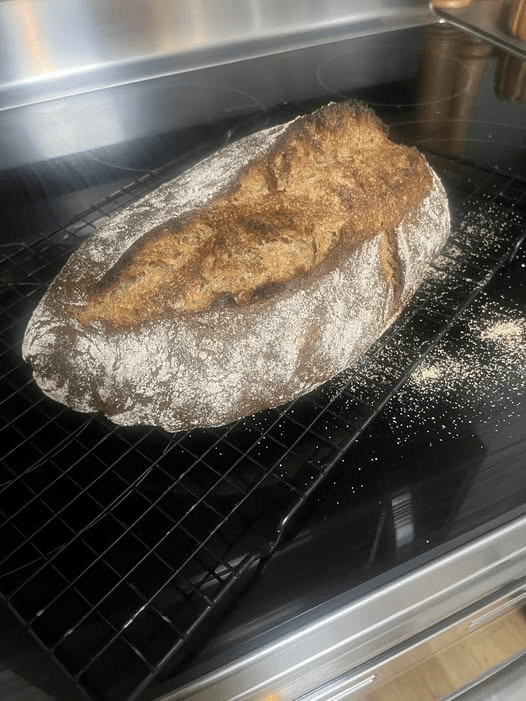
These microorganisms are already present on the grain, especially in the lovely wild stone ground flour we are using. Its also present in the air, and on our hands and kitchen tools. So, I began using a 50/50 mixture of water and flour and over about 10 days, I discarded most of it and fed it with another 50/50 blend. I did that religiously until it settled down and smelled lovely and sour rather than like acetone. At that point I put it in the fridge, sealed. Armed with a sourdough starter, that we call Guinnivere, we now have a new friend in our kitchen that needs love and attention.

When I make pizza dough, I use a specific recipe:

  • 150g of pizza flour
  • 9 g of salt
  • 270 g of water (at 65 degrees)
  • 1 packet of yeast
  • Then once its combined, I mix it at medium speed for about 7 minutes.
  • After that, I let it rise for about 5 hours in the proofer before I separate it and let it rise in the fridge for two or three days.

What makes working with sourdough starter is that it all takes a little bit longer. First of all, the quantities are quite different. There has to be an adjustment on both the amount of dough as well as the amount of water. This is what I do;

  • 365 g flour
  • 225 g water (instead of 220 g)
  • 100 g starter
  • 9 g salt

Then, I put it, covered, in the proofer, but instead of 5 hours, it lives there overnight. By that time, it rises quite a lot, which is good. It keeps yeast active, it speeds bacterial activity just enough, which it allows the gluten to develop before the cold (of the second rise) tightens it. Once it rises and I have divided it for the second rise, I cover it with olive oil so it does not dry out, I let it rise in the fridge for 30 minutes uncovered before covering it.

As it chills in the fridge, the fermentation slows, the structure set and the handling improves dramatically.

Divided, each piece makes a 14 inch pizza that tastes brilliant!

This is the look right before it goes in the fridge.

I normally cover the dough with olive oil so it doesn’t dry out, then put it in the fridge uncovered for 30 minutes before covering them. I try to make them 2 or 3 days before we need them so they can continue to ferment.

Panang Beef Curry

This is without a doubt, one of my favorite Thai meals. There used to be a Thai restaurant in walking distance from my First Hill office back in the day, and my colleague, Joni, and I used to go there for lunch regularly. I always got Panang Beef and once I started cooking for myself, this was one of the first dishes I tried. I remember the first time I shared this dish with Heather. She was VERY skeptical, but being a good soldier, she tried it. Now it’s her very favorite of our Thai dishes. Her favorite part are the Korean red peppers, which are so fragrant. I always serve it over Jasmine rice.

Ingredients:

  • NY steak
  • Panang Curry paste
  • Coconut milk
  • Thai peppers
  • Kafir lime leaves
  • Korean red peppers
  • Jasmine rice

This is the mise en place all ready for the cook. The meat is marinating in fish sauce and olive oil. The secret to this meal is to use a great cut of meat.

Sole in Panko

We call this meal “Crack”. It’s by far my favorite version of Sole. The way I make it is similar to the way my mom made it, but way better! I use a very spicy mixture of peri peri and black pepper that I mix with flour, egg, and panko. Then I fry it in butter and olive oil, cover the fish in tasted almond slivers and sprinkle with parsley, then serve it with lemon slices.

Ingredients:

  • Sole (Dover or Petrale)
  • 3 eggs
  • Japanese panko
  • Peri Peri
  • Black Pepper
  • Butter
  • Olive oil
  • Lemons

Hot Italian Sausage with La Peperonata – Bell Peppers in Tomato Sauce

The sauce is actually very tasty. Using a chopped onion, loads of garlic, along with chopped red, orange and yellow bell peppers in a bath of crushed Italian tomatoes. Because we like it hot, I added a healthy pinch of red pepper flakes early in the process as the onions were sweating. We also had a couple of left over hot Italian sausages from our pizza the other day, so we picked up a French Baguette and made what we called “Italian sloppy Joes”. Super yummy. We toasted the bread, layered some sauce, and fontina cheese, then split the sausage and covered the lot in loads of the Peperonata sauce. It was super yummy!

Frittata

Nothing like a frittata on a Sunday morning in front of the fire watching footy. This was a “what in the fridge” sort of breakfast. I threw it all together and YUMMY! The secret is to spread the the ingredients evenly across the skillet carefully pour the custard (with the garlic and spices) over the vegies etc, then crumble fetta cheese over the top. Drop it in a 400 degree oven for 20 minutes and sprinkle chopped italian parsley over it before serving.

Ingredients

  • 6 eggs whipped with a half cup of milk
  • 6 garlic cloves
  • A quarter of a red onion
  • A chopped Serrano pepper
  • The basil we could salvage
  • Leftover sausage and mushrooms from our Funghi Salsiccia pizza last night
  • Fetta cheese
  • Italian parsley
  • salt/ground pepper/peri peri

Funghi Salsiccia

Another one inspired by Pagliacci Pizza, Theirs includes Cascioppo’s Italian sausage, mushrooms, fresh mozzarella, sea salt and olive oil with crushed Italian tomatoes as a base. Our version uses Hot Italian sausage. This pizza needs a lot more flavor. More heat for sure! Work to do. On the other hand, our sourdough pizza crust was stellar.

It looked lovely before baking

Pesto Primo

This pizza is inspired by Pagliacci’s version which includes thyme-roasted artichoke hearts, peperonata peppers, ricotta, fontina and mozzarella over their pesto base. Ours includes fresh thyme along with marinated artichokes and a sweet pepper we had in the fridge. Its a pretty good pizza if I am honest. The Artichokes eat like meat and have a nice acidic brininess to them. We enjoyed it. More importantly, we used our first iteration of sourdough crust on this one. I feel pretty chuffed about that. It was definitely great dough.